
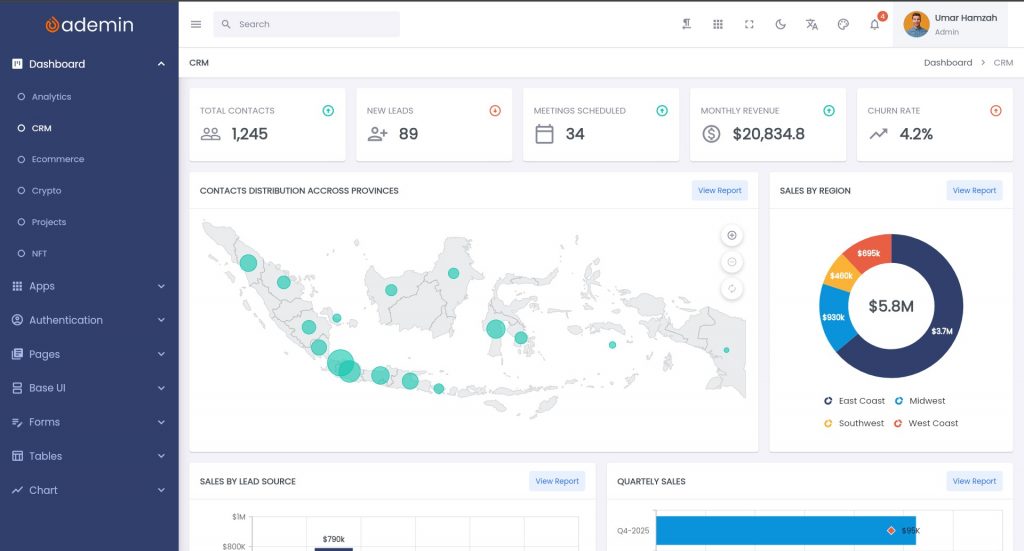
The landscape of software development has historically been defined by “The Great Translation.” For decades, engineers have acted as translators, taking human intent and painstakingly converting it into machine-readable syntax. In 2026, that translation layer is dissolving.
We have entered the era of Agentic Engineering and Vibe Coding. For Flutter developers—especially those focused on the high-stakes world of enterprise dashboards and SaaS products—this isn’t just a new set of tools; it’s a fundamental shift in how applications are conceived, architected, and scaled.
1. The Death of Boilerplate: Defining Agentic Engineering
In 2024, we had “Copilots”—AI assistants that suggested the next line of code or finished a function. In 2026, we have Agents.
Agentic Engineering refers to a workflow where autonomous AI agents operate with high-level goals. They don’t just write code; they manage the lifecycle of a feature. An agent can:
- Analyze the existing project structure (e.g., a Flutter project using Riverpod).
- Plan the necessary changes across the Data, Domain, and Presentation layers.
- Execute the code generation.
- Verify the output by running unit tests and checking for linting errors.
For a Flutter dashboard, this means the end of manually creating models, repositories, and state notifiers for every new data widget. The “boilerplate” has been automated, allowing the developer to focus on the system architecture.
2. Vibe Coding: The New Developer Experience
The term “Vibe Coding” might sound casual, but it represents a sophisticated high-level abstraction. It is the ability to maintain a “flow state” where the developer describes the visual and functional “vibe” of a dashboard, and the agentic system manifests it.
“Vibe Coding is the transition from being a bricklayer to being an architect. You aren’t worried about the consistency of the mortar; you’re worried about the flow of the building.”
In a Flutter context, Vibe Coding looks like this:
- “I want the sales dashboard to feel ‘Executive’—high contrast, deep shadows, and use our primary ‘Midnight Blue’ palette. It needs a real-time graph of MRR using a 7-day rolling average.”
The Agentic system then pulls from your pre-defined UI Kit, hooks into your Riverpod providers, and generates a responsive layout that adheres to your specific design tokens.
3. The 2026 Tech Stack: Why Flutter Wins for Agentic Development
By 2026, Flutter has evolved beyond being a mobile framework. It has become one of the most effective platforms for building AI-friendly applications, particularly complex admin panels and dashboard systems.
The reason goes beyond performance. Flutter’s greatest strength is its predictability.
For human developers, predictable systems are easier to maintain.
For AI agents, predictable systems are easier to understand, modify, and extend.
This distinction is becoming increasingly important as AI moves from code generation to active participation in software development workflows.
Deterministic UI: A Perfect Match for AI Agents
Flutter’s declarative and deterministic rendering model gives AI agents a significant advantage when reasoning about user interfaces.
A widget produces the same output given the same input.
There are fewer hidden runtime behaviors, fewer framework-specific edge cases, and less ambiguity compared to traditional web stacks.
When an AI agent is asked to:
- refactor a screen
- extract reusable widgets
- add new functionality
- update layouts
it can trace the widget tree and understand the relationship between UI components with much greater confidence.
Predictable UI leads to predictable AI-assisted development.
The Impeller Revolution
The full maturity of the Impeller rendering engine has eliminated one of Flutter’s historical pain points: shader compilation stutter.
For dashboard applications, this matters.
Modern dashboards increasingly include:
- live charts
- animated metrics
- real-time monitoring panels
- data visualizations
By 2026, Flutter applications deliver consistently smooth interactions across desktop, mobile, and web environments.
The result is a user experience that feels closer to native software than traditional browser-based dashboards.
WebAssembly (WASM) Makes Flutter Web Viable at Scale
Flutter Web has undergone a major transformation through WebAssembly. Large-scale dashboards can now process significant amounts of data directly in the browser without introducing noticeable lag.
Tasks such as:
- filtering large datasets
- rendering complex data tables
- handling interactive charts
- processing regional planning data
can be performed efficiently without requiring users to install desktop applications.
For many organizations, Flutter Web is no longer a secondary deployment target—it is the primary platform.
One Codebase, Every Screen
In 2026, organizations are no longer building separate admin panels for web, desktop, and mobile. Teams expect a single codebase that can deliver consistent experiences across every platform.
Flutter enables:
- Web dashboards for clients
- Desktop applications for internal staff and administrators
- Mobile apps for field officers and executives
- Kiosk and large-screen displays for public information systems
The same business logic, design system, and data models can be shared across all platforms. This significantly reduces maintenance costs and allows AI coding agents to work more effectively because they only need to understand a single codebase.
Riverpod Becomes the Standard
As AI-assisted development becomes more common, architecture choices matter more than ever. Riverpod has emerged as the preferred state management solution for many modern Flutter projects because it is easier for both humans and AI agents to reason about.
Its provider-based architecture creates explicit relationships between:
- data sources
- business logic
- application state
- user interfaces
An AI agent can quickly understand how data flows through the system without navigating deeply nested widget trees or relying on BuildContext-dependent patterns.
The result is a codebase that is easier to maintain, easier to scale, and easier to automate.
The New Competitive Advantage: AI-Friendly Architecture
The most successful dashboard projects in 2026 are not necessarily those with the most features. They are the projects with architectures that AI can understand. Development teams are increasingly optimizing their applications for two audiences:
- Human developers
- AI collaborators
This means embracing:
- feature-based architecture
- separation of concerns
- reusable widgets
- strongly typed models
- clear naming conventions
- predictable folder structures
These practices improve productivity for developers today while enabling AI agents to contribute more effectively tomorrow.
In many ways, the future of software engineering is no longer about writing more code.
It is about building systems that both humans and AI can understand.
4. Architecting for Scale: The “Agent-Ready” Dashboard
To leverage Agentic Engineering, your dashboard cannot be a “spaghetti” of code. It must be architected so an AI agent can understand it. In 2026, Clean Architecture is no longer optional; it is the prerequisite for AI collaboration.
The Layered Breakdown
| Layer | AI’s Role | Human’s Role |
| Data Layer | Generating DTOs, API Clients, and Caching logic. | Defining API contracts and security protocols. |
| Domain Layer | Creating Entities and basic Use Cases. | Validating business logic and edge cases. |
| Presentation Layer | Composing widgets from a UI Kit, managing state via Riverpod. | Fine-tuning the “vibe” and UX flow. |
The Power of “AI-Ready” UI Kits
The secret weapon of the 2026 developer is a modular UI Kit. Instead of letting an AI hallucinate a random button style, you provide it with a catalog of pre-coded, themed widgets.
- Consistency: The AI uses your
AppDashboardCardrather than making a newContainer. - Speed: You can prototype a full dashboard screen in minutes because the agent is just “importing and assembling.”
5. Data Visualization: Moving Beyond Static Charts
In 2026, dashboards are no longer static snapshots. They are interactive environments.
Real-Time Streams
Using Riverpod StreamProviders, dashboards now reflect live data (e.g., server health, live sales, or regional data element inputs) with zero manual refresh. Agentic systems can automatically set up the WebSocket or Firebase listeners required to keep these “live.”
Interactive Exploratory Data Analysis (EDA)
Agentic Engineering allows for “Natural Language Querying” within the dashboard. A user can type, “Show me a comparison of revenue between Metro and Jakarta for Q3,” and the dashboard will dynamically generate a new chart widget on the fly to answer the question.
6. The Role of the Software Engineer in 2026
If the AI is doing the “coding,” what are you doing?
- System Architect: You define how the pieces fit together. You choose the state management (Riverpod), the database (Isar or Supabase), and the design system.
- Product Visionary: You focus on the user’s problem. Does this dashboard actually help a city planner make better decisions?
- Agent Orchestrator: You learn how to prompt and “steer” multiple agents to work together. You are the conductor of a digital orchestra.
“The value of a developer in 2026 is measured by their ability to think, not their ability to type.”
7. Conclusion: Embracing the Agentic Future
The transition to Agentic Engineering and Vibe Coding isn’t a threat to Flutter developers; it’s a superpower. It removes the drudgery of manual UI implementation and elevates the developer to the role of a high-level creator.
By combining:
- Flutter’s high-performance rendering (Impeller/WASM),
- Riverpod’s robust state management,
- And Modular UI Kits optimized for AI agents…
…you can build dashboards that are more scalable, beautiful, and functional than ever before.
The year 2026 is about speed without sacrifice. It’s time to stop fighting the syntax and start engineering the vibe.